

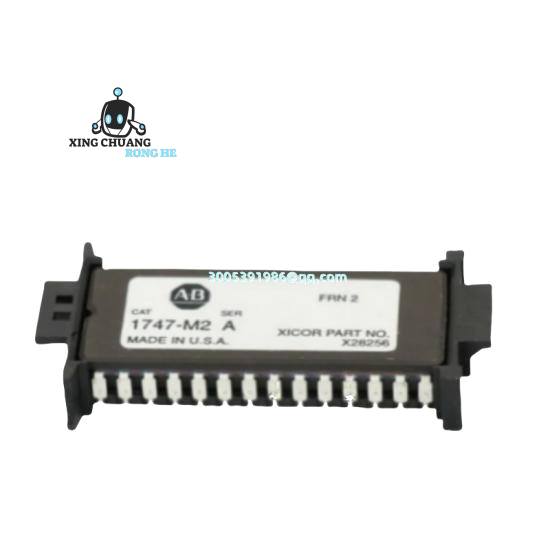
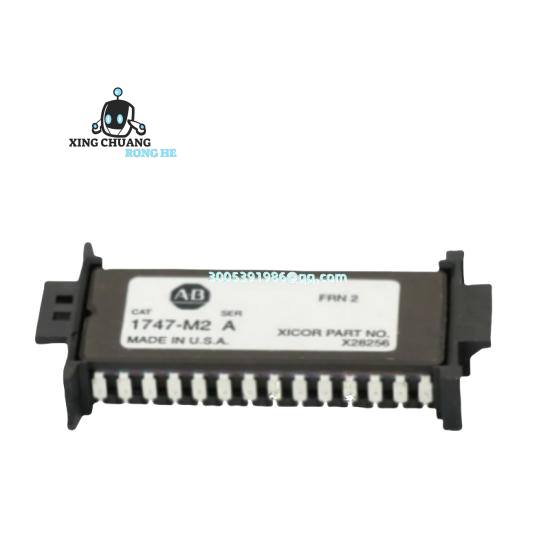
Allen Bradley 1747-M2(4K) Memory Module: Your SLC 500’s Data Lifeline
If your SLC 500’s memory module is acting up, you’re probably staring at a production line grinding to a halt. The 1747-M2(4K) isn’t just another chip—it’s the quiet workhorse keeping your ladder logic alive during power hiccups and brownouts. We’ve seen paper mills and auto plants rely on this thing for years, especially when you can’t afford to rewrite programs after every grid flicker. Honestly, it’s the unsung hero when your backup battery dies mid-shift.
| Specification | Detail |
|---|---|
| Product ID | 1747-M2(4K) |
| True Capacity | 4K words (8KB) – supports up to 4,000 instructions |
| Memory Type | Battery-backed EEPROM (lasts 10+ years with fresh CR2032) |
| Physical Size | 8.5 x 5.5 x 2.2 inches – slides into SLC 500 chassis slots |
| Weight | 0.6 lbs – won’t stress mounting rails |
| Interface | DH+ or RS-232 (no Ethernet – that’s a common mix-up!) |
You’ll spot this module everywhere from aging bottling lines to municipal water plants still running SLC 500 racks. Last month, a steel mill in Ohio called us frantic because their 1747-M1 kept corrupting data – turned out they needed the M2’s extra buffer for their rolling mill controls. If you’re maintaining legacy systems, watch for these siblings: the 1747-M1 (2K), 1747-M13 (8K), or even the battery-less 1747-CPM. Funny enough, most field techs actually prefer the older M1 for simple tasks – less overkill. But when your process needs breathing room for HMI comms or analog scaling? That’s where the M2(4K) earns its keep.
Why It Still Holds Up After 20+ Years
Let’s be real – nobody designs PLCs like this anymore. But that’s exactly why plants cling to it. The EEPROM doesn’t need constant refreshing, so it laughs off 50ms power dips that’d crash modern systems. Saw one survive a lightning strike last winter because the SLC 500’s chassis grounded everything properly. Compatibility’s dead simple too: just slot it into any 1747-A4, -A5, or -B5 backplane. No firmware headaches, no IP conflicts. And while it won’t win speed contests, that 0.6ms scan time? Plenty for conveyor logic or tank level control. Honestly, the only headache is replacing the battery every decade – but even that’s a 5-minute job with a coin. Kinda makes you miss the old days, huh?
There are no reviews yet.