

Allen-Bradley 1756-OB16D: Industrial Digital Output Workhorse
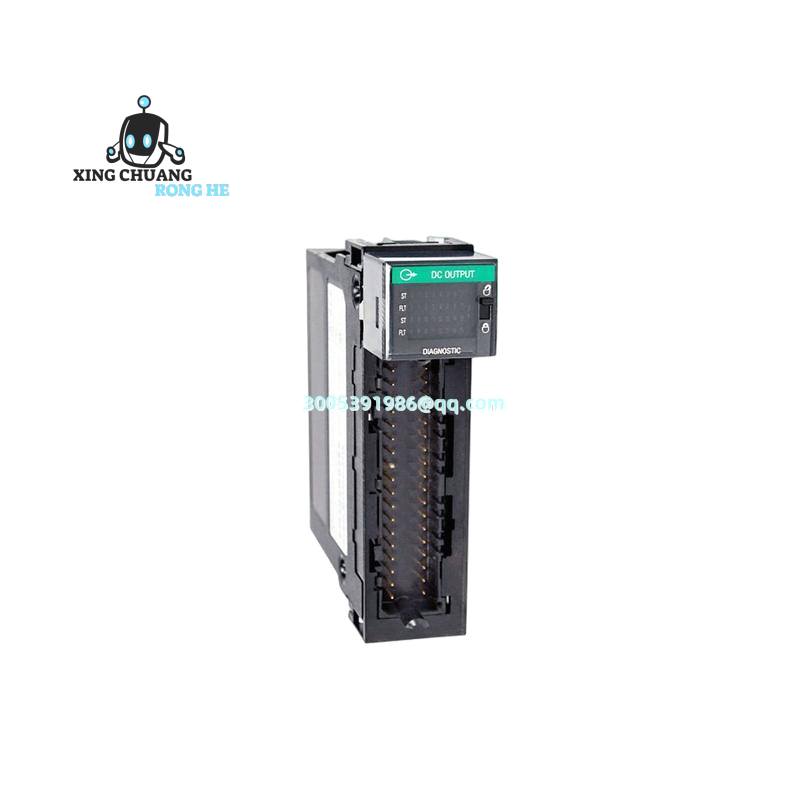
If you’ve ever wrestled with flaky relay outputs on a production line, this module’s got your back. The 1756-OB16D handles 16 channels of 24VDC switching for motors, solenoids, or safety circuits—exactly the kind of gritty work that keeps bottling lines or stamping presses humming. It’s not fancy; it just doesn’t quit when voltage spikes hit or factory dust settles in.
| Brand | Allen-Bradley (Rockwell Automation) |
| Model | 1756-OB16D |
| Output Type | Sinking Digital (NPN) |
| Channels | 16 isolated points |
| Per-Channel Current | 0.5 A continuous (2A peak) |
| Isolation | Grouped channel-to-channel (500V AC) |
| Temp Range | -20°C to 60°C (operating) |
| Weight | 350g |
| Certifications | UL 61010-2, CE, C-Tick |
Typical installation in a food processing line control cabinet
Where It Pulls Its Weight
Seen this guy everywhere from automotive paint shops to wastewater plants—anywhere you need rock-solid outputs without breaking the bank. One plant manager told me it replaced three cheaper modules that kept failing near welding stations. We pair it daily with FANUC robots (like DSQC 652s), GE Fanuc RX3i racks, or even alongside Triconex 3505s for safety interlocks. If you’re running legacy Allen-Bradley systems or integrating with Foxboro FBM240s, the 1756-OB16D slips right in. Honestly, it’s the module you forget about because it just works.
Terminal block detail showing rugged screw-down connectors
Why It Outlasts the Competition
Don’t let the no-frills look fool you. That grouped channel isolation? Saved my bacon last winter when a 480V surge fried everything else on the rack except this module. The terminals actually grip wires tighter than most Euro-style connectors—I’ve seen vibration-heavy installations where competitors’ modules arced out after six months. It’s not “smart” by modern IoT standards, but for pure, dumb reliability? Unbeatable. One note: skip it if you need 110VAC outputs (that’s the OB16E’s job), but for 24VDC stuff in dirty environments? Personally, I’d trust this over newer “smart” modules any day. Oh, and the diagnostic LEDs actually help—you’ll spot a blown fuse or shorted channel in seconds without a laptop.
There are no reviews yet.